
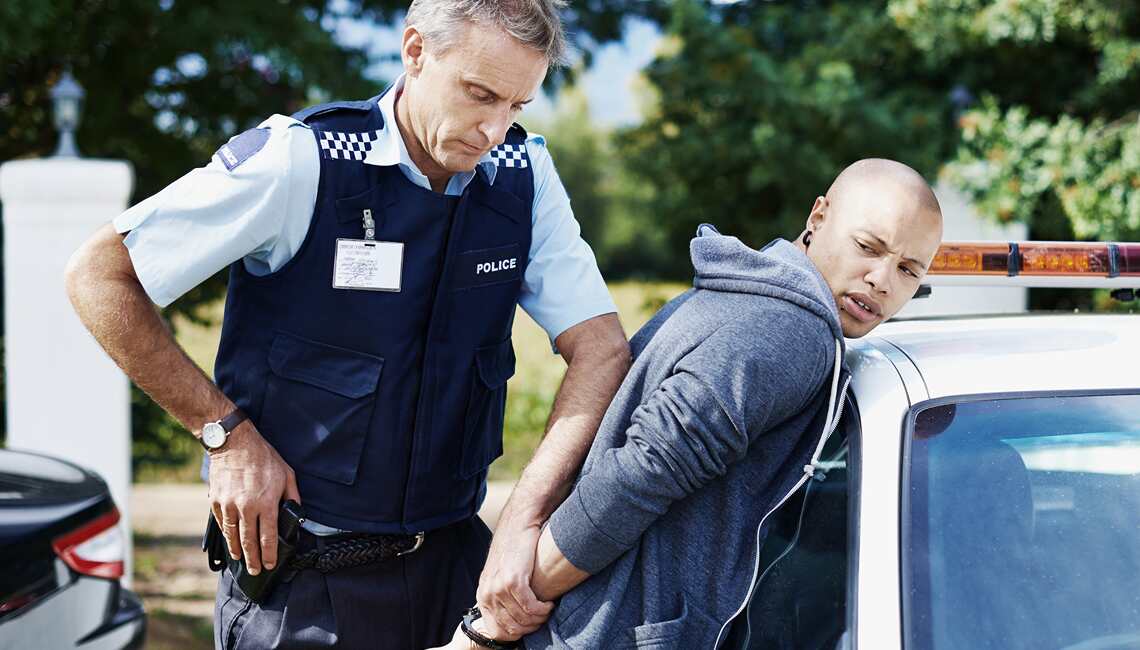
Most people accept that police officers sometimes need to use force. Officers may need to:
- Prevent crime.
- Make arrests.
- Protect the public.
- Protect themselves.
- Prevent a suspect from escaping.
The law recognises this reality. However, what many people do not realise is that police officers do not have a general right to use force whenever they think it would be helpful. The force used must be lawful, necessary and reasonable in all the circumstances.
Just as importantly, officers are expected to be able to explain and justify their actions afterwards.
That is not simply a bureaucratic requirement. It is one of the most important safeguards within the criminal justice system. We have seen a rise in videos being posted online by members of the public who have taken the quick action of filming what seems to be unreasonable conduct by the police and the understandable outrage this can provoke when the police conduct shown reflects nothing short of retaliation or unlawful assault or violence coming from those in a uniform.
What Is “Reasonable Force”?
The phrase “reasonable force” appears simple, but applying it in practice is often far more complicated. Police officers are trained to assess situations using recognised decision-making models. They are expected to consider the information available to them, assess threats and risks, identify available options and choose the least intrusive option capable of safely achieving the objective.
In practical terms, an officer should be able to explain:
- Why force was required.
- What they were trying to achieve.
- Why alternative measures would not have worked.
- Why the degree of force used was proportionate.
The more serious the force used, the more important that justification becomes.
The Principle of Proportionality
One of the most common misunderstandings is the belief that force is justified if it achieves compliance. That is not the legal test.
An action can be effective without being lawful. An officer may obtain compliance by using force. That does not automatically make the force reasonable, necessary or proportionate. The question is not:
“Did it work?”
The question is:
“Was it justified?”
The law requires officers to consider the least amount of force necessary to achieve a legitimate policing objective.
A Case That Illustrates the Point
We recently represented a client in a road traffic related investigation into a fail to provide charge where questions about the police conduct became every bit as important as the allegation itself. The client was arrested at the roadside and handcuffed. At that stage there was nothing particularly unusual about the situation. Police officers routinely deal with uncertainty when making arrests and may be entitled to use handcuffs as a precaution. The issue was not how the encounter started. The issue was how it developed.
Body-worn video showed our client was not behaving aggressively. He was not threatening officers, not attempting to assault anybody and was not presenting the sort of danger that most members of the public would associate with a violent confrontation.
Despite this, the encounter escalated and our client was taken to the ground whilst handcuffed behind his back smashing his face on the pavement in the process.
An experienced independent expert in police use of force was instructed to review the available evidence. After examining the body-worn video, custody records and other material, the expert concluded that the force used appeared difficult to justify on the information available. The expert considered that alternative options remained available and that the takedown was neither the lowest level of force available nor obviously necessary to achieve the policing objective.
The consequences were immediate.
The individual suffered a head injury. Any injury to the head carries obvious risks, which is why police officers receive training concerning the management of head injuries and the need for prompt medical assessment.
What made the case especially interesting was that the concerns did not stop with the takedown itself. The expert also questioned the continued use of force afterwards.
The client remained handcuffed behind his back during transport, whilst suffering visible injuries and during parts of a medical assessment. The report concluded that each stage required fresh consideration of whether continued restraint remained necessary and proportionate. A use of force that may initially be justified does not remain justified automatically simply because it was justified five or ten minutes earlier.
The report further highlighted concerns regarding gaps in the available body-worn video and questioned whether the available records provided a complete picture of everything that occurred during the detention process.
When the expert report was served on the Crown along with a detailed skeleton argument outlining all of the failings by the police whose conduct had materially contributed to the client’s refusal to participate in the evidential procedure at the hospital, the Crown served a notice of discontinuance the day before the trial.
The case serves as a useful reminder that force is not judged solely by how an incident begins. Courts will often look carefully at how events developed, whether decisions were continuously reviewed and whether officers can properly explain why each use of force remained necessary as circumstances changed.
Why Record Keeping Matters
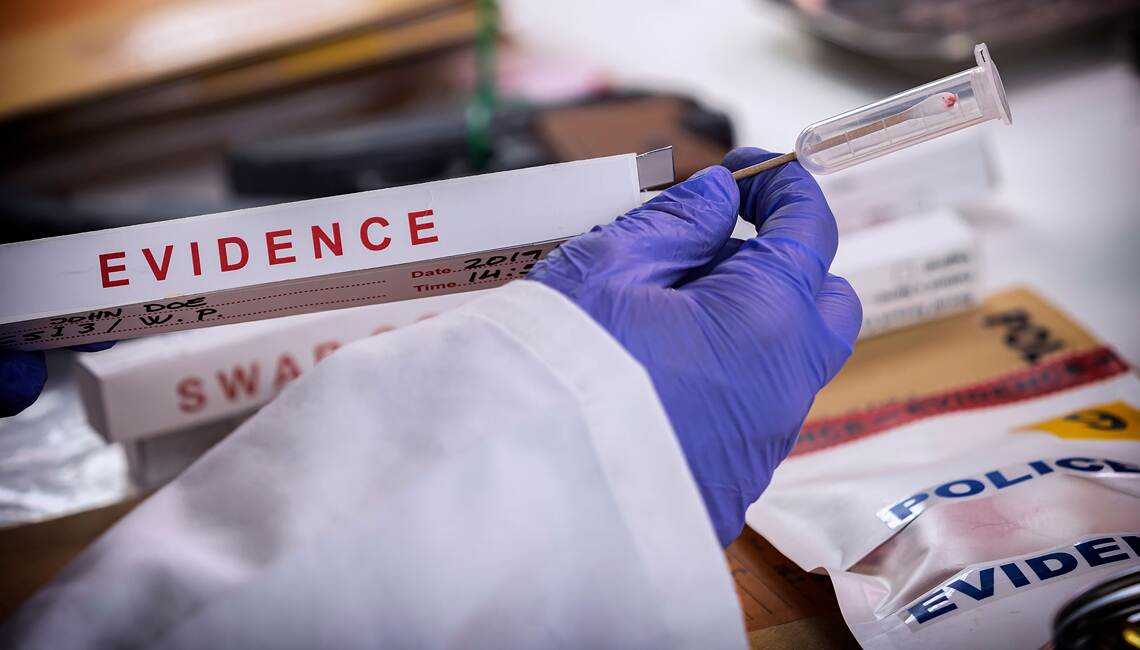
Cases involving force often turn on evidence. That evidence may include:
- Body-worn video.
- Custody records.
- Use of force reports.
- Notebook entries.
- Incident logs.
- Medical records.
- Witness statements.
Proper records serve several important functions. They protect members of the public. They also protect police officers. They assist courts.
Most importantly, they allow independent scrutiny of decisions that may have significant consequences. A professionally recorded rationale often allows a court to understand exactly why a decision was made. Conversely, where records are incomplete, inconsistent or missing altogether, difficult questions can arise.
Body-Worn Video Has Changed Criminal Defence Work

The growth of body-worn video has transformed this area of law. Historically, many allegations concerning police conduct involved conflicting accounts.
Modern video evidence can often answer crucial questions:
- Was the suspect compliant?
- Were warnings given?
- What level of resistance was actually being encountered?
- Did events happen in the way later described?
- Were injuries obvious at the time?
Video evidence is not infallible, but it frequently provides a far more reliable account than memory alone. In many cases it protects officers from unfair allegations.
In others it reveals issues that may otherwise have gone unnoticed.
Resistance Is Not Always What It Appears
Another important issue is the distinction between genuine resistance and behaviour that merely appears unusual or uncooperative. There is a substantial difference between:
- A violent suspect attacking officers.
- A suspect actively resisting arrest.
- A confused individual.
- A frightened individual.
- A vulnerable individual.
- A neurodivergent individual.
- Someone who does not understand what is being asked of them.
Police training increasingly recognises the need to assess vulnerability and communication difficulties before escalating force.
Behaviour that appears non-compliant at first glance may sometimes have entirely different explanations.
The National Decision-Making Model
Policing is built around a structured decision-making process that requires officers to gather information, assess threats and risks, consider legal powers, evaluate available options and justify the action ultimately taken.
This is important because decisions are often reviewed months or even years later in court proceedings, complaints investigations or misconduct hearings.
A key question frequently asked is not simply whether an officer had the power to act, but whether the officer can explain why the chosen option was necessary, proportionate and reasonable in the circumstances as they honestly believed them to be.
Good policing is not judged solely by outcomes. It is judged by the quality of the decision-making process.
How Do These Issues Assist In A Defence?
Questions concerning force do not arise only in complaints against the police. They can become highly relevant within a criminal prosecution itself. Issues that may become important include:
- Whether admissions were made voluntarily.
- Whether procedures were properly followed.
- Whether relevant evidence has been disclosed.
- Whether officer accounts are consistent with the available footage.
- Whether the conduct of the investigation affects the reliability of evidence.
An experienced defence lawyer does not simply examine the allegation. They also examine the investigation.
Sometimes the strongest points in a case come not from what the defendant is alleged to have done, but from how the authorities responded afterwards.
What We Look For
When allegations of excessive or inappropriate force arise, we routinely consider:
- Body-worn video footage.
- Custody records.
- Use of force documentation.
- Medical evidence.
- Photographs of injuries.
- Witness accounts.
- Disclosure issues.
- Consistency between different police accounts.
It is not uncommon for important details to emerge only after careful examination of the available material.
“Bad Eggs” Are The Minority
Police officers perform an enormously difficult job and are sometimes required to make decisions in challenging and fast-moving situations. Most officers exercise their powers professionally and lawfully.
However, the power to use force carries significant responsibility. We have seen many shocking instances of where this responsibility and power is abused. One of the more recent and outrageous examples of this was in the Panorama documentary aired last year. Thankfully this resulted in a number of “bad eggs” being removed from the Police Service. Most officers do not behave as disgracefully as those featured in that show but officers should always be able to explain:
- Why force was necessary.
- Why it was proportionate.
- Why alternative options were insufficient.
- Why it remained justified as circumstances changed.
That is why body-worn video, proper record keeping and independent scrutiny are so important.
The anonymous case discussed above demonstrates a point that is sometimes overlooked. A use of force does not become lawful merely because it produces compliance. Every stage of the incident must be capable of justification, and every significant decision should be open to scrutiny.
At Geoffrey Miller Solicitors, we regularly review body-worn video, custody records, medical evidence and police documentation when preparing criminal defence cases. Sometimes the most important issue in a prosecution is not what is alleged to have happened. It is whether the investigation itself was conducted lawfully and fairly.



















Add comment