
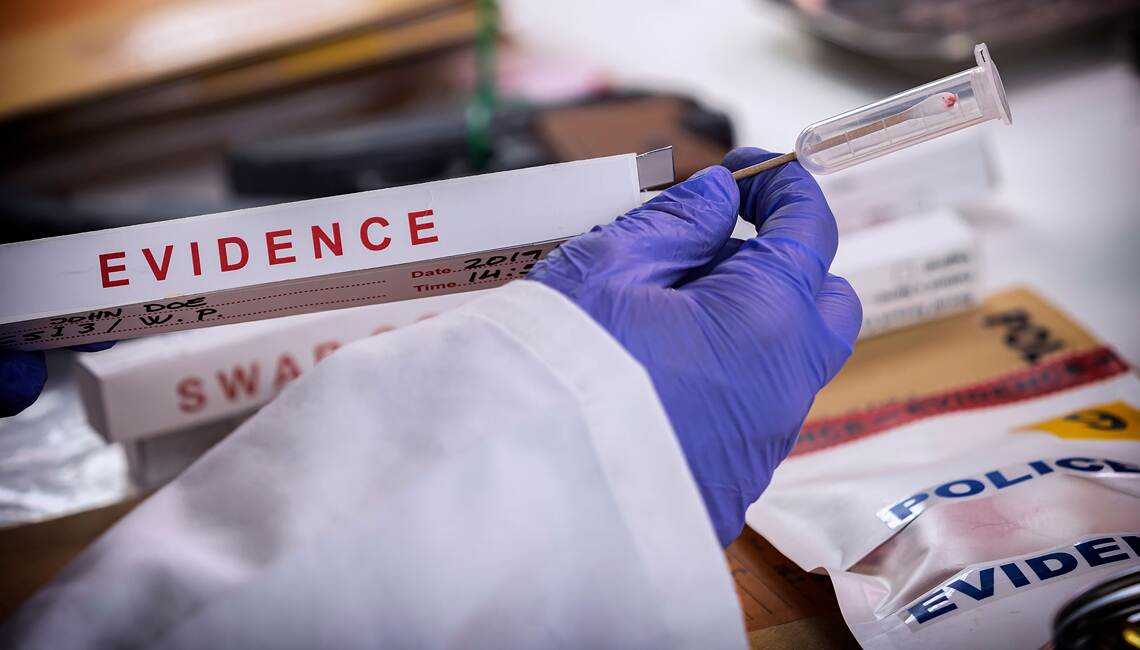
A drug driving prosecution was dismissed after careful preparation by Geoffrey Miller Solicitors identified serious problems with the prosecution’s expert evidence and its failure to comply with court directions.
Our client had pleaded not guilty to an allegation of driving with cannabis above the prescribed limit. The case was listed for trial at Exeter Magistrates’ Court on 22 October 2026.
Careful preparation before trial
The case was prepared by James Tunstall in collaboration with Geoffrey Miller Solicitors’ Managing Director, Jeanette Miller.
From an early stage, James and Jeanette identified that the prosecution’s toxicology evidence required proper scrutiny and that compliance with the Court’s directions concerning expert evidence would be crucial.
The Court had directed the prosecution to serve its SFR2 by 19 August 2026. The timetable was designed to allow the defence to inspect the underlying analytical data and, if necessary, obtain its own expert toxicology evidence.
That deadline was not met.
The defence raised the prosecution’s non-compliance on three separate occasions.
It was not until 15 October, just days before the trial, that the prosecution served an SFR2, despite the document itself being dated 10 August. It was accompanied by an analytical data pack which was incomplete.
This left the defence with only four working days before trial to consider the material and obtain expert evidence, rather than the period envisaged by the Court’s directions.
Why the analytical data mattered
This was not simply a technical complaint about a missed deadline.
In a drug driving prosecution, the underlying analytical material can be important to understanding and, where appropriate, challenging the reliability of the reported toxicology result.
Our strategy was therefore to ensure that the prosecution complied properly with its expert evidence obligations and that our client had a fair opportunity to have the material scrutinised by a toxicology expert.
The late disclosure made that extremely difficult.
Further information disclosed immediately before the trial also revealed that two blood extractions had been obtained and that the first had been discarded. Had the disclosure failings not been so severe, this point alone was such a major procedural breach by the police that it would have resulted in our client’s acquittal had we had to argue the case beyond initial legal argument.
At the same time, the healthcare professional involved in the procedure did not attend court. The prosecution informed the Court that they had been unable to locate him, despite having indicated only a week earlier that they were ready for trial. Their attendance was essential due to a dispute over valid informed consent for our client’s blood being extracted. Then the new discovery that two extractions of blood had in fact occurred.
The argument at court
At trial, counsel instructed on our client’s behalf raised a preliminary legal argument concerning the prosecution’s failure to comply with the rules governing expert evidence.
During the argument, the prosecutor ultimately conceded that the defence had suffered prejudice and that our client could not receive a fair trial that day.
The prosecution applied for an adjournment, explaining that, for reasons which were unclear, the police had not sent the SFR2 to the CPS until 6 October.
The application was strongly opposed on behalf of our client.
The District Judge refused the prosecution’s application to adjourn the trial.
Crucially, the Judge also refused to allow the prosecution to rely upon its expert evidence because of its late service and the resulting prejudice to our client.
Without that evidence, the prosecution offered no evidence.
The case was dismissed.
Preparation proved decisive
This case demonstrates why defending a drug driving allegation can involve far more than simply looking at whether a laboratory result is above the prescribed limit.
Our preparation involved identifying precisely what expert evidence was required, scrutinising compliance with the Court’s directions, repeatedly raising the prosecution’s failures when deadlines were missed and ensuring that the consequences of the extremely late disclosure were properly argued at trial.
The prosecution could not provide important expert material at the eleventh hour without giving the defence a proper opportunity to consider it and obtain expert advice.
For our client, who was at risk of a three year ban if convicted due to a previous historical conviction, the detailed preparation undertaken by James Tunstall, working collaboratively with Jeanette Miller, proved decisive.
At Geoffrey Miller Solicitors, we specialise in defending allegations involving drug driving, drink driving and other serious motoring offences. We know that the detail of the evidence, the way it has been obtained and the procedure by which it is presented can be every bit as important as the headline allegation.
This acquittal is not a rarity as is demonstrated by our team’s phenomenal track record in drug driving defence.
That said, every case depends upon its individual facts and circumstances, and previous results do not guarantee a similar outcome in another case.



















Add comment