

“I wasn’t offered a blood sample” – The power to move on to blood in excess alcohol matters
When we receive enquiries from prospective clients about their drink driving allegation, it is often the case they raise the fact that they were not offered to have a sample of blood taken and wonder whether this could be a defence.
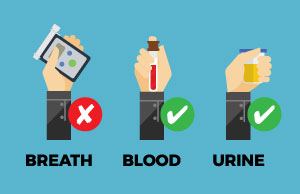 If you were arrested for drink driving before 10 April 2015 but you provided a borderline breath test (anything below 51µg in breath), the police had to offer the option of replacing your breath test with a blood or urine test. This process was referred to as “The Statutory Option” and was originally introduced in the 1980’s when evidential breath testing devices were relatively new and their accuracy was considered questionable.
Since 10 April 2015 the statutory option was abolished as despite very little changes in the mechanics of the breath testing equipment since the 1980’s, the government considered evidential breath testing equipment to be reliable. Therefore, in many cases when we are asked by a client whether a blood test should have been offered, the simple answer is “no”.
However, there are certain scenarios and arguments we have raised in defence of a drink driving charge historically in relation to whether the police should have requested a sample of blood or conversely, whether they had the power to require blood.
Section 7(3) R.T.A 1988 provides that a requirement for blood or urine can only be made at a police station or at a hospital and cannot be made unless:
- The constable making the requirement has reasonable cause to believe that for medical reasons a specimen of breath cannot be provided or should not be required; or
- At the time the requirement is made a device or a reliable device is not available to use or is not practicable to use; or
- A breath testing device has been used but the constable who required the specimens of breath has reasonable cause to believe that the device has not produced a reliable indication of the proportion of alcohol in the breath of the person concerned
The statutory wording of Section 7(3)bb RTA 1988 indicates the test is objective – the prosecution must establish that the officer had a reasonable cause to believe that the instrument has not produced a reliable indication. “Belief” imports a higher degree of certainty than mere suspicion.
The issue has also been argued in the reverse. Rather than arguing that blood should have been required, we have argued that based off the machine result and the officer’s actions they should NOT have required a sample of blood.
Issues relating to the power to move on to blood are often complex and require meticulous care and handling. If you are involved in a case where you believe the prosecution should have, or should not have required a blood sample it is best to reach out at the earliest possible stage to seek our input and we can advise you further about your options.


















Add comment