
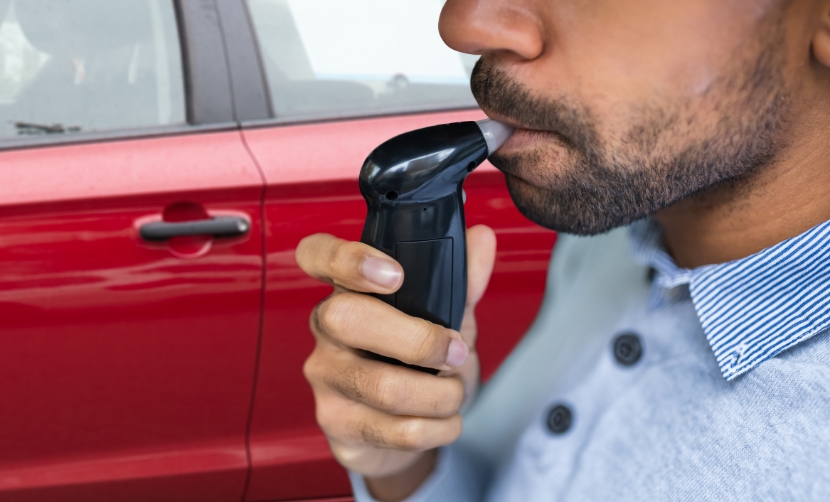
Police officers tend to have a favourite reusable phrase to describe how easy it is to provide an evidential breath sample along the lines of; “I’ve seen a person with one lung do this” or “90 year olds are able to use this machine” or “It’s not rocket science, it’s blowing into a tube.”
Experts in respiratory medicine would often beg to differ with this simplistic view. We find that in many cases the ability to provide a breath sample into one of the three Home Office approved evidential breath testing machines in use in the UK can be complicated by multiple internal and external factors that need to be considered on a case by case basis.
Providing a specimen of breath requires that a person meet a certain volume, or at least a certain rate, of breath, but it also requires that the breath be delivered in a relatively long, steady, continuous flow. This immediately raises a proportion of suspects in two categories who are unable to provide a sample; those who run out of breath and those with “poor technique”. Experts in the respiratory field say that both of these issues can be caused by pre-existing health conditions. However, contrary to what some may think, for these issues to be classed as a “reasonable excuse” the defendant does not have to have been aware of a medical reason why they were unable to provide the same or to have raised that reason for it to be a valid defence to a fail to provide charge.
The machines:
The handheld device: a small digital device with a tube sticking out of it. The device can easily be mistaken for a “walkie talkie”. These little devices are simply a preliminary test and give the police the green light to arrest a suspect and take them to hospital or back to the station, to be tested on the big evidential machines that give more accurate evidential readings. Handheld devices require a shorter sharper breath than their evidential counterparts; to provide a specimen on a handheld device, you generally must blow a minimum of 1.5 litres of air, at a rate of 25 litres per minute, for 2.5 seconds.
Evidential devices: These are the devices that determine whether a defendant will face a charge for drink driving and they require a slightly different technique than the portable versions. In order to provide a specimen on this machine, a person must blow a minimum of 1.2 litres of air, at a rate of 12 litres per minute, for 6 to 12 seconds. To make things more complicated, the individual also has a window of 3 minutes per cycle on the machine to provide two specimens in this manner.
Simply put, the evidential breath testing devices require a longer, continuous and steady blow for a period of over 6 seconds. Many individuals find this technique of blowing more difficult than the technique required for the roadside test which can lead to people succeeding at the roadside and failing to provide at the station. If you are able to blow out hard, then you will be able to provide on a handheld device, whereas the evidential device requires a level of control that can be more challenging.
When providing on an evidential machine, a person is blowing against a fixed resistance and a variety of volumes are accepted above the 1.2 litre minimum, up to a maximum of 4 litres. This means that those with larger lungs will have to blow out a higher volume. This is because the intention of the machines is to get the air from the bottom of your lungs, where the alcohol will be concentrated. Despite the perceived fairness of those with larger lungs blowing larger volumes, this test still means those with small lungs have to blow a higher proportion of their total lung capacity.
Excuse, asthma, disease, or dysfunctional breathing?
The reason that someone fails to provide appears to be a notoriously difficult issue to identify. The conditions that can cause a person to fail are so varied that it seems only a team of experts from different medical fields could be certain of the cause. However, as defence experts in this field, we are often able to raise the likely reason with the support of opinion from forensic respiratory experts.
There are often a combination of issues that contribute to difficulty providing and these are included in a forensic expert’s reports. This process normally requires a face to face examination including lung function testing and a review of the defendant’s medical notes. The expert then gives their opinion on whether any conditions, underlying or otherwise, have caused breathing difficulties severe enough to constitute a medical inability to provide in the allotted time. However, the defence do not have to prove this issue beyond reasonable doubt. Raising the possibility of reasonable excuse then requires the Prosecution to disprove the reason raised beyond reasonable doubt.
Medical conditions that are commonly cited by respiratory experts:
- Asthma – worse when exercising, at night, in the cold and triggered by all sorts, including; pollen, sprays, weather, animals and smoke.
- Dysfunctional breathing – often triggered by stress and caused by anxiety or panic attacks. This can also be caused by compensating for another condition that has affected breathing. This is a common explanation for “poor technique”.
- Lung disease – pulmonary fibrosis etc.
- Chest wall/diaphragm/muscle diseases – kyphoscoliosis and neuromuscular disorders, for example.
- Airways diseases (other than asthma) – cystic fibrosis etc.
- Bird Fancier’s Lung – Yes, this is an actual condition and one that we have used in a successful defence!
- Pain – bruising to the abdomen, chest pain, back pain, even arthritis.
- Tonsilitis – yes, even that can have an effect.
- Old age – not a condition as such but lung function does decrease as you get older.
- Short stature – smaller lungs.
- Female subject – ok, definitely not a condition! However, studies have shown that women find providing a specimen on an evidential breath test device more difficult than men, particularly when both subjects have other breathing issues.
Some of the issues above are enough to explain a failure to provide alone, and others issues would need to team up to constitute a valid reason for not providing. For example; a more senior female of short stature with mild asthma, may be able to provide at 70 years old, but then unable at 80, due to further reduced lung function.
What does all this mean?
The police tend to be fairly dismissive and sceptical of anyone who fails to provide a specimen assuming that there is deliberate intent at play. This can lead to a false assessment of the potential chance of a NOT GUILTY verdict. However, our years of experience in successfully defending failing to provide a specimen charges suggests otherwise.
If you are arrested for drink driving and then charged with failing to provide a specimen, there are many factors to be considered before deciding on your plea. It is well worth contacting us for a more specific view of the options.









Add comment