
The Department for Transport has put forward several new proposals to alter the way motorists are penalised for certain offences, including issuing fixed penalties for careless driving offences.
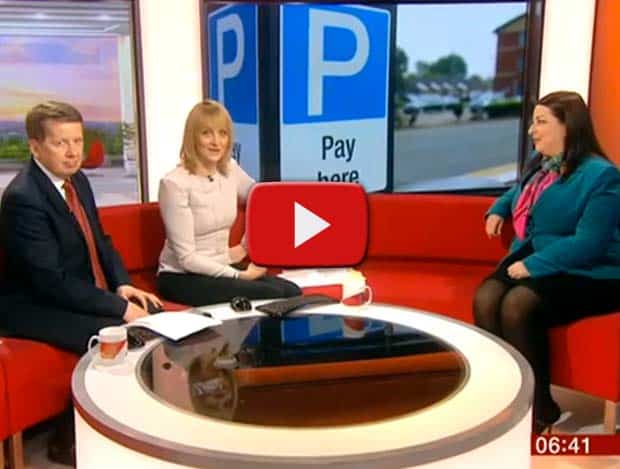
Jeanette Miller was interviewed on BBC Breakfast on 16 June 2012 about this proposal and gave her views on why it is a bad idea.
In practice, the process of charging offending motorists with careless driving involves vast amounts of paperwork, including putting a prosecution file together to be presented at Court. This is clearly not only time consuming, but also resource intensive for the police and the Court. The Association of Police Chief Officers (ACPO) have previously specified that due to the high costs and time consumption, the police sometimes opt not to charge a motorist with a low level isolated incident of careless driving.
This clearly cannot be beneficial for the everyday road user as careless driving (regardless of level of severity) can increase danger to other road users and ultimately cause more accidents.
Currently, the police only have two options with careless driving:
1) Issue a warning to the driver about their driving standard
2) Issue a court summons. If convicted, the offence attracts 3 – 9 points, a discretionary disqualification and a fine of up to £5000.
The Department for Transport has indicated that Court appearances should be saved for the more serious cases of careless driving and many incidents will be able to be dealt with by way of a fixed penalty.
New Proposal
The Government is proposing to include careless driving in the catalogue of offences that can be dealt with by way of a fixed penalty. It would give the police the power to offer remedial training for less serious cases and hopefully reduce the levels of careless driving in the future.
The offence of careless driving would carry an endorsement of three penalty points and the level of the fixed penalty would be set at £90.
The fixed penalty would give the offender the option to either accept penalty points and a fine or accept remedial training which would be paid for by the individual. The remedial training works in a similar way to a speed awareness course as it would prevent the person from receiving any points for the offence. If the alleged offender does not agree with the allegation of careless driving, the option to contest will naturally still remain and the client can then have their day at court.
Possible Advantages
1) The police would have a much more efficient method of dealing with the offence. The time taken for a police officer to complete a fixed penalty would be far less than preparing a court file ready for prosecution.
2) The hope is that the number of incidents of careless driving will reduce. The fixed penalty was introduced for driving whilst using a mobile phone in 2003. The penalty was increased with the introduction of penalty points in 2007 and the fine was doubled to £60. Following this change, it was reported that the number of fixed penalties issued decreased by more than a third. This demonstrates that a fixed penalty can deter drivers from committing the offence, not only due to the fine incurred, but the increase of already sky-high insurance premiums with the penalty points.
3) The courts are already at brimming point, and the fixed penalty option will hopefully free up court time. Many incidents that would usually give rise to a court appearance may be able to be dealt with by way of a paper exercise.
The decision to set the penalty level at £90 is to bring it in line with the cost of the remedial training. The intention is to make the course a viable option, as the alternative would result in penalty points on your licence.
It is envisaged that fixed penalties and remedial training would only be offered in situations witnessed by a police officer where there are no victims, no collisions and no public complaint.
Possible Disadvantages
We have grave concerns about this particular proposal because the offence of careless driving is not as black and white as perhaps other offences where fixed penalties are issued. For example, when a client is prosecuted for being on their mobile phone and offered a fixed penalty, there is no need for interpretation of a number of case specific circumstances. The driver was either on their phone or not. The same with no insurance and speeding. However, with careless driving a the standard of driving must be considered which is ordinarily the responsibility of the court. Making this the responsibility of a lone officer, who may have simply got out of bed on the wrong side is another way of making the system, which is already heavily weighted against the motorist, even more unfair and difficult to fight.
And we are not the only ones to think this. The vast majority of the viewers who commented on the BBC Breakfast Facebook thread on this topic agreed with us.





















Add comment