

Guest Blog by Sophie Higham, junior paralegal
Most of us do it, knowingly or unknowingly, we have all been guilty of speeding. Whether it is because of being in a hurry, being in a daze or just simply that you enjoy it, most of us have gone over that speed limit for one reason or another. Often, we tell ourselves “an extra couple of mph will not matter” (spoiler alert – it does matter). So, receiving an invitation to complete a speed-awareness course can come as quite a shock and I for one was more than bemused. After all, I’d never been caught before and hundreds of other drivers do it, why make a big deal of it now?
Why choose the speed awareness course in the first place?
In 2018, the speed-awareness course was the most popular driving course with 1.19million people attending. And, if you didn’t already know, the speed-awareness course is an option. You can choose to take the 3 points and the £100 fine and save the 4-hours of your life spent at the course. However, I didn’t want the points on my licence and so opted for the course instead.
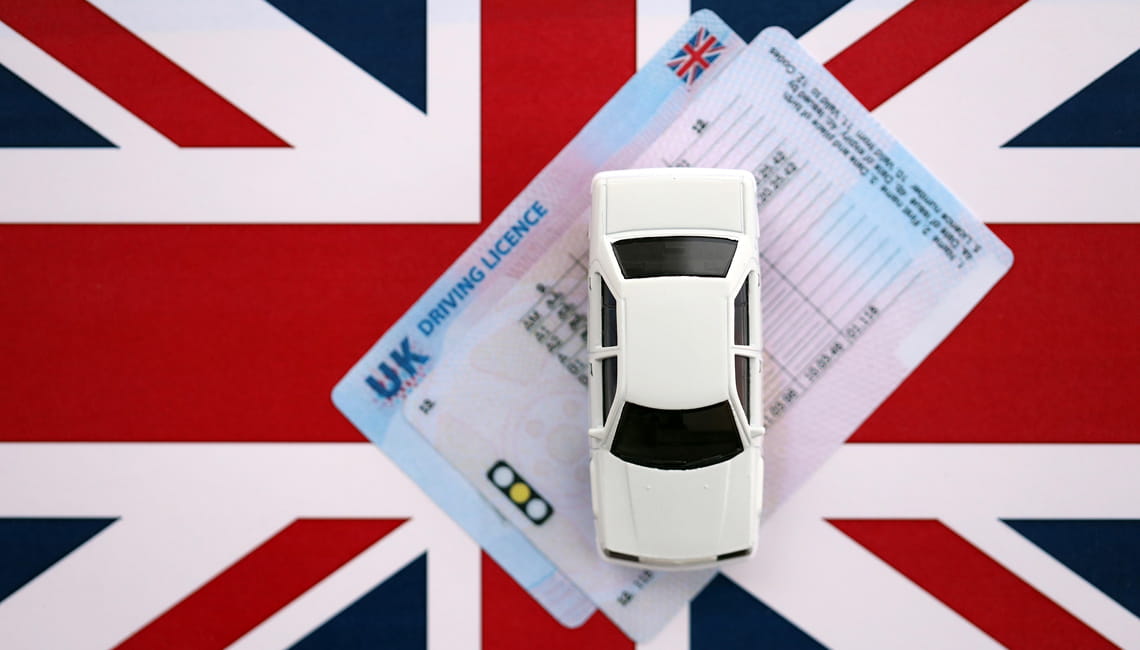
Penalty points, also called endorsements, are imposed on your driving licence if you commit or are convicted of many driving offences, the most common of which is speeding. The points will vary according to the driving offence committed.
Points stay on your license for a minimum of 4 years, but car-insurance companies consider them for 5 years.
Having penalty points on your licence usually means your insurance premium will rise in price when it comes to your renewal of insurance. Insurance premiums are calculated according to numerous variable factors, including your address, type of vehicle and your age. Our money saving calculator outlines the likely increase in insurance based on our 2020 market research with some premiums increasing more than 75% – that is if they will even insure you at all!
By electing the speed awareness course instead of points, in addition to the fact that you get no points on your licence, you also pay a little bit less than the fixed penalty fine. It isn’t a massive discount, but it is a saving! Instead of paying the fixed penalty fee, you pay for the cost of the course. In my case this was £95 but this may differ around the country.
The course takes 4 hours to complete so in that 4 hours you surely want to learn something you didn’t know before.
…And you do, here is what I took away from the speed-awareness course that I did not learn on my driving lessons.
LESSON 1 – How to know the speed limit of the road
 It sounds so simple – you just look for the road signs, right? But there are so many other ways to know the speed limit on any given road. We may think we already know, but how many of us get caught speeding simply because we didn’t know the speed of the road, or the speed limit had changed since they were last on the road.
Knowing the speed limit is something that is taken for granted, something which you are just simply meant to know. You may learn some of it on your driving theory test but forget as soon as you see the pass mark.
A big tip provided during the speeding course is “IT IS ALL ABOUT STREET LIGHTS”. If there are streetlights on a road this means it is 30mph. This is of course unless you are told otherwise by gateway speed limits (2 speed limit signs on either side of the road) and following this repeater signs (smaller signs ever so often).
 If there are no streetlights, this means it is a national speed limit road. An easy way to remember this is ‘NSL’. No Street Lights (NSL) = National Speed Limit (NSL). You will also know it is a national speed limit road because there will be gateway signs on each side of the road, displaying the NSL sign which is a white circle with a black line diagonally through it. The national speed limit is 60mph on a single carriageway and 70mph on a dual carriageway (with a couple of exceptions). You will know the difference between these roads by seeing if there is a central reservation or not. Contrary to popular belief, it does not matter how many roads there are, there just needs to be a clear separation of the roads. Of course, motorways are always 70mph unless told otherwise, due to roadworks etc., and you will know you are on the motorway because of the below blue signs.
LESSON 2 – The speed limit depends on the type of vehicle you are driving

As mentioned above, there are exceptions to what your national speed limit is. Many drivers believe the speed only depends on the type of road; I was surprised to discover that it also depends on the type of vehicle you drive. Unless you are driving a car or motorcycle you can pretty much always take off 10mph from the national speed limit. This even applies to transit vans. I am sure there are many of us who drive a van every day for work who had no idea they were speeding when doing 70mph on the motorway. See above for the speed limit of your vehicle on any given road.
LESSON 3 – Those couple of extra MPH increase risk significantly
This is by far one of the biggest lessons I learnt on the speed awareness course. We underestimate the seriousness of speeding by an extra few mph. Speeding, even just by 1mph, does matter. It does not matter how experienced a driver you are, or how well you know the road, you cannot change physics.
This is all to do with stopping distances. Stopping distance is the time that it takes to bring a moving car to a complete stop. This includes:
- The time it takes to react to a hazard (thinking distance); and
- The time it takes for the brakes to stop the car (braking distance)
The current measurement being used to determine thinking distance is 0.67 seconds. This was calculated by a man sitting in a room and tapping a button every time a light came on. They calculated his response time, and now use this to determine the average thinking time of all persons. Remember, in this scenario there were no distractions or hazards.

If you are travelling at 30mph and an emergency occurs, you will come to a complete stop in 23 metres (or 6 car lengths). If you were travelling at 31mph, just one mph faster, at 26 metres you would still be travelling at 8mph.
In the middle range, if you are travelling at 50mph and an emergency occurs, you will come to a complete stop after 53 metres (or 12 car lengths). If you were doing 55mph on this same road and the same emergency occurred, at 53 metres you would still be travelling 23mph.
In the high range, if you were driving at 70mph and came to a complete stop due to an emergency, you would travel 96 metres (or 22 car lengths) before stopping. If you were doing 100mph on that very same road and that very same emergency occurred, at 96 metres you would still be travelling 71mph. According to the Department for Transport some 48 per cent of drivers exceed 70mph on the motorway. Ask yourself is it worth it?
As mentioned before, the test for thinking distances was not of a high standard and on today’s modern roads it is very unlikely that driving is ever as easy or distraction-free as sitting and pressing a button every time a light comes on.
LESSON 4 – Driving at a faster speed doesn’t save you the time you think it does
Another big shock during the speed awareness course was being told the little amount of time you save when you speed. This was the final piece of information we were given on the course and they noted they save it until last on purpose because it is the main thing that nobody ever understands.
Most of us are under the impression that you get there much faster if you speed. I mean it’s logical, if you clear more road in a faster time, you must get to your destination sooner, right?
Well, no, not right…
If you do 100 miles at 80mph you only save 10 minutes compared to doing the same 100 miles at the safe speed limit of 70mph. Most motorway trips – 88% according to research – are less than 50 miles. Hence, in many cases, driving at 80mph only saves you 5 minutes and that is if you are driving the whole stretch at 80mph consistently.
When 1 in 6 deaths on UK roads are due to speeding, you do have to ask yourself whether that extra 5 minutes saved is worth the risk that speeding entails. If it is worth the risk, then ask yourself is it worth the pennies? Driving at 80mph uses at least 25% more fuel than driving at 70mph does.
Overall, what I learnt on my speed awareness course was more than enough for me to class myself as an ex-speeder. It isn’t worth the risk or the pennies. A seminar like the speed awareness course is needed on driving lessons as the information is presented to you in a much more engaging and useful way.














Add comment